Skin-To-Skin Care For Your Baby
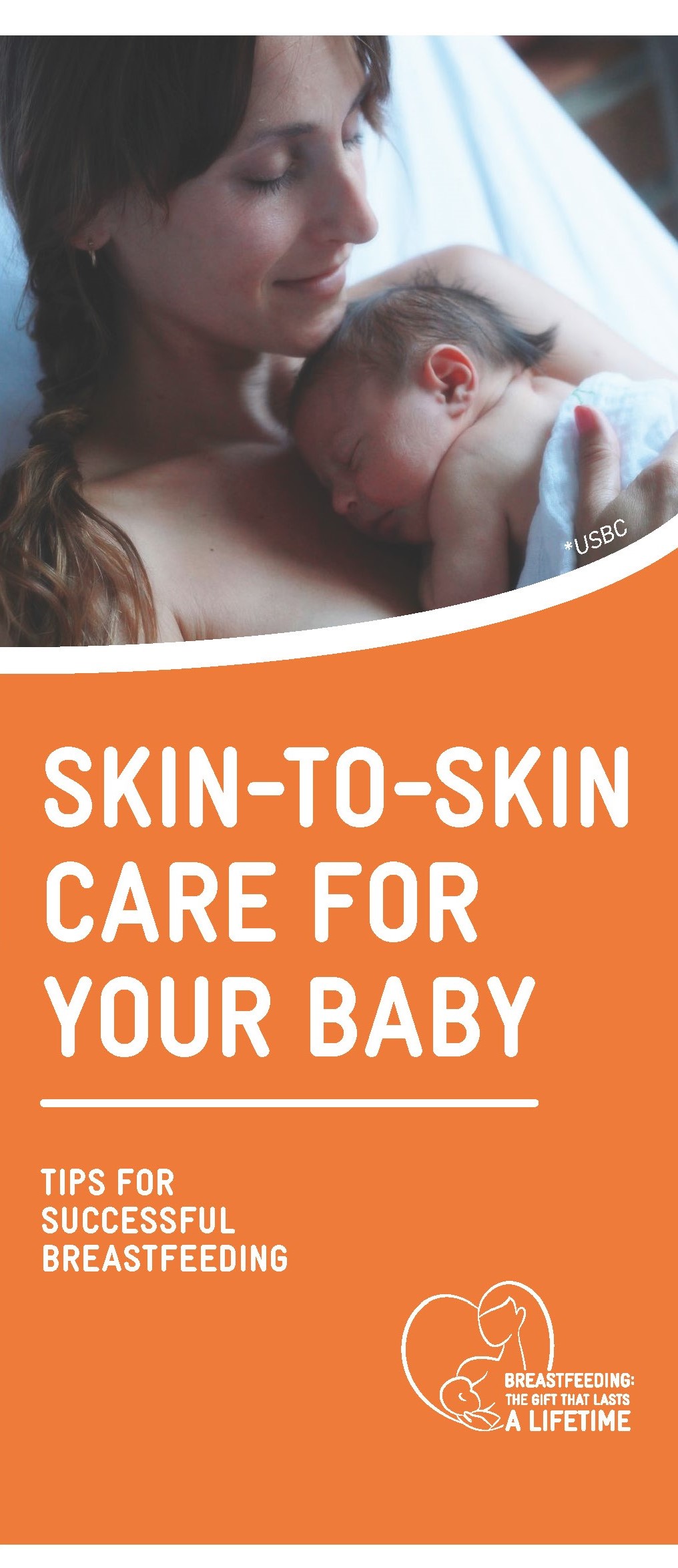
Skin-to-skin, which can also be called
kangaroo care, is when your naked baby,
wearing no more than a diaper, is placed
against your bare chest. Holding baby close in
this way provides a great way to start right after
birth. This allows baby and you to snuggle and
cuddle. It helps baby get off to a good start with
breastfeeding, while keeping some things the
way baby was used to while you were pregnant.
When should skin-to-skin be done?
Right after baby is born
Having the baby skin-to-skin on the birthing
parent for the first hour after birth helps settle
the baby and allow baby to make their way to the
breast to feed. Baby is most alert at this point, so
timing is perfect to begin to learn this new skill.
When awake in the hospital
Do skin-to-skin as much as you can while
you are awake in the hospital. This will help
bring in your milk supply more quickly.
After hospital discharge
Keep doing skin-to-skin once baby is home. This
helps baby feel secure and calm and baby may
cry less as a result. Skin-to-skin can be done
as often as you choose. Many try to keep it
up a few times a day. Be sure that the person
holding baby skin-to-skin is always awake.
How is skin-to-skin helpful?
Babies held skin-to-skin
- Stay warm
- Breathe and sleep better
- Feel more connected to their nursing parent
- Get breastfeeding off to a good start
- Have normal blood sugar level
- Feel secure and calm
Breastfeeding parents who do skin-to-skin
- Make more breastmilk
- Feel calmer
- Learn about their babies’ needs
- Bond with their babies
- May be less likely to have postpartum
anxiety or depression
Others who hold baby skin-to-skin
- Connect with baby
- Feel included
- Enjoy the process
Who can do skin-to-skin
- Parents and other caregivers all
can do skin-to-skin care.
- Twins can be held skin-to-skin at the
same time on a parent or caregiver.
- Premature babies, even very tiny
ones, can do skin-to-skin.
- All healthy babies can do skin-to-skin.
How is skin-to-skin done?
- Baby, wearing no more than a diaper,
is placed on your bare chest between
the breasts.
- A blanket can be placed over both
caregiver and baby, if needed
for warmth.
- Another family member or caregiver
can place a hand on the baby’s back to
make sure baby is secure and safe.
- Babies born very early usually need
to stay longer in the hospital. Families
can stay close to baby by doing skin-toskin or kangaroo care. Ask the nurse or
doctor about holding baby skin-to-skin.