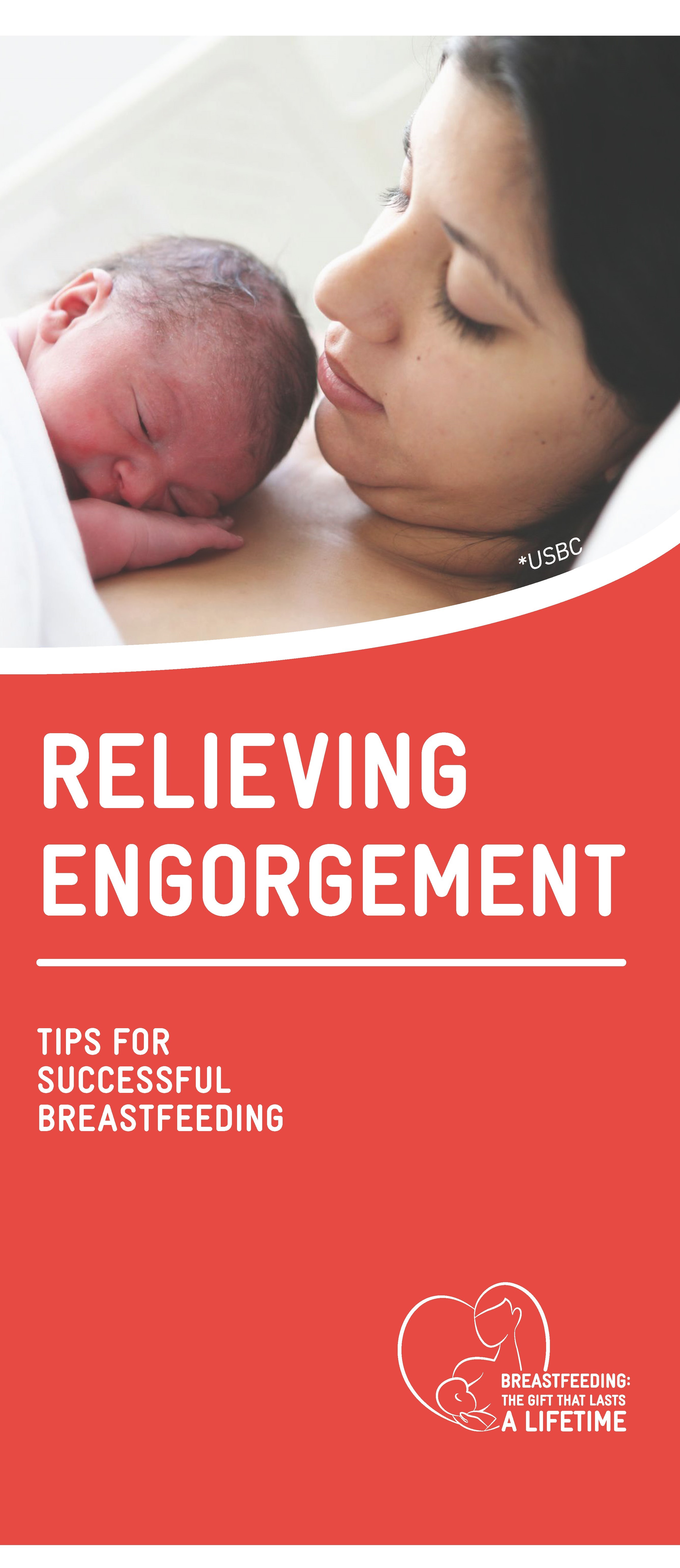
Relieving Engorgement
Engorgement is extreme fullness of the breasts,
which causes an uncomfortable feeling. It
is not unusual. It can be very normal if it
happens when mature milk first comes in, about 2
to 5 days after giving birth. Those who nurse older
infants can also get engorged if the breast is not
emptied well or if one or more feedings are skipped.
Keep in mind that there are things you can do
to prevent or relieve engorged breasts. If your
breasts are engorged, you should still breastfeed
or pump milk from your breasts. When you
empty your breasts well, it will help resolve
the problem and your breasts will feel softer.
Signs you may be engorged
- One or both breasts are hard and warm.
- Skin in the breast area is tight and shiny.
- You feel constant soreness throughout
one or both of your breasts.
- It may be hard for your baby to
latch onto one or both breasts.
Tips to prevent and relieve engorgement
Breastfeed often
Feed your baby at least every 2 to 3 hours. If your
baby does not wake that often, wake them to feed.
Be sure to nurse long enough to soften and empty
the breast — at least 10 to 15 minutes per breast.
Avoid giving your baby parcifiers or bottles
Babies suck differently on pacifiers and bottle
nipples than they do from the breast. Using
these might confuse your baby and make
them less able to get milk from your breast.
Avoid giving your baby water and formula
Water (which is usually not recommended
for babies less than 6 months old) and
formula may fill your baby up so they do
not take as much breastmilk from you.
Use a warm compress just before nursing
About 10 minutes before you begin to nurse
your baby, place a clean warm compress
on your breasts. Some people take a warm
shower to help relieve discomfort.
Gently massage your breasts
Lean back and, with a light touch, gently stroke
away from the nipple to help soften your breasts
just before feeding. Some breastfeeding parents
find it helpful to also do this during the feeding.
Remove a small amount of milk
If it is hard for your baby to latch onto the area
around your nipple, try to hand express or
pump a little milk to soften the breast tissue.
Nurse on the more engorged breast first
Your baby’s suck is often strongest
at the start of the feeding.
You need your rest, too!
Take care of yourself. Try resting when your baby
naps. Ask friends and family for help—they can
free up your time by doing laundry, cleaning,
cooking, or caring for the baby while you sleep.
Between feedings use a cold compress
on your breasts to ease discomfort
A wet cloth that has been placed in the
freezer or a bag of frozen peas or corn works
well as a compress. Protect your skin by
wrapping the compress in a soft dry cloth.
Be sure nothing is too
snug over your breasts
Choose a supportive bra without an
underwire. Your clothing, especially your
bra and nightgown, should not be too tight.
If using a baby carrier, it should not bind
your breast tissue in the underarm area.
Trust your body
After the first few weeks of breastfeeding, your
body will adjust to your baby’s needs and your
breasts will feel softer. This does not mean you
are making less milk. If you are concerned, ask
your breastfeeding specialist how you can be
sure the baby is getting enough of your milk.