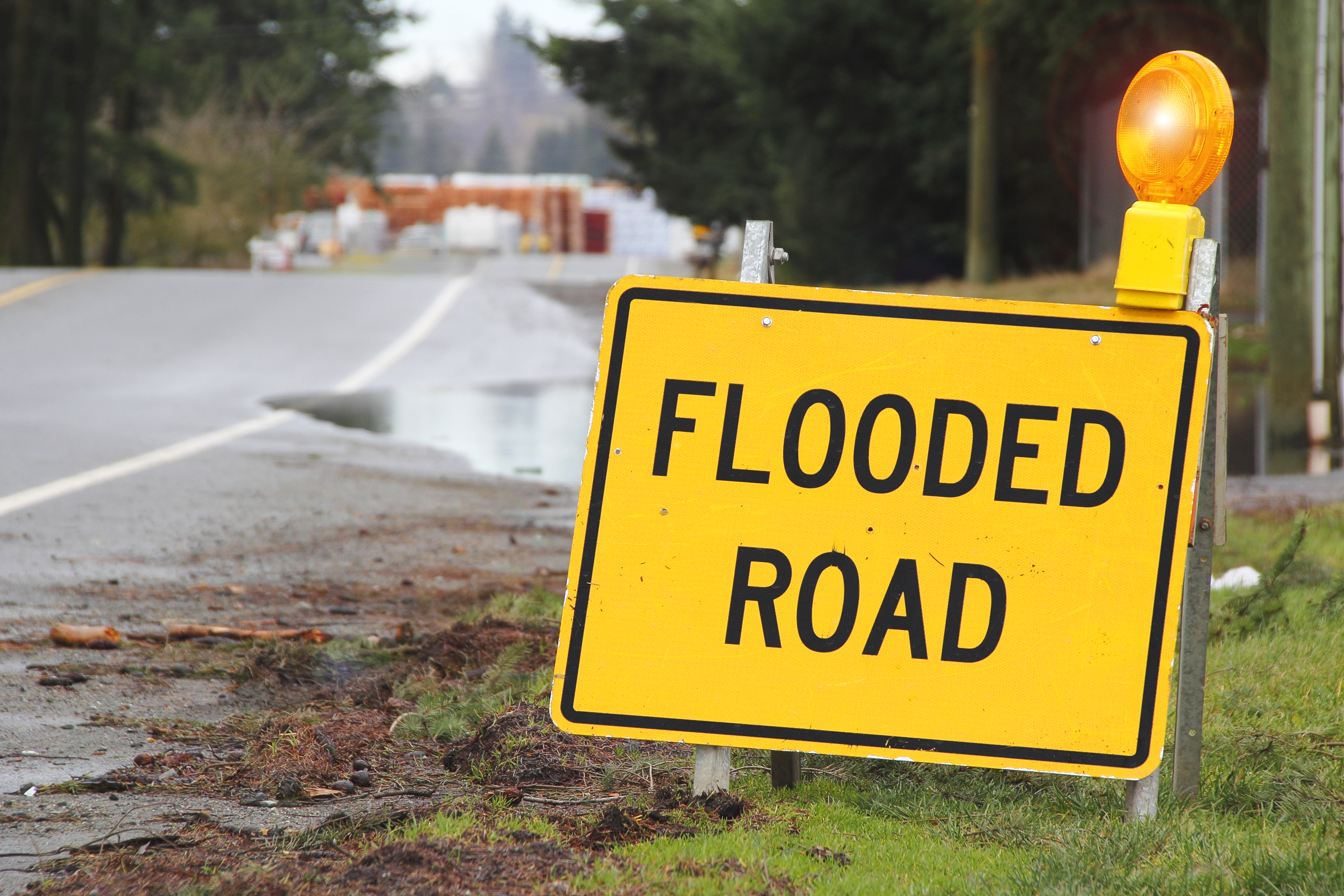
Flooding is a temporary overflow of water onto land that is normally dry. Floods are a common disaster in Maryland, especially in spring and summer. Failing to evacuate flooded areas or entering flood waters can lead to injury or death.
Floods may:
- Result from rain, snow, coastal storms, storm surges and overflows of dams and other water systems.
- Develop slowly or quickly. Flash floods can come with no warning.
- Cause outages, disrupt transportation, damage buildings and create landslides.
If you are under a Flood Warning:
- Find safe shelter right away.
- Do not walk, swim or drive through flood waters. Turn Around, Don't Drown! NEVER drive through a flooded roadway. The water could be deeper than you think.
- Just six inches of moving water can knock you down. One foot of moving water can sweep your vehicle away!
- Do not drive on a bridge over fast-moving floodwaters. The foundation may be weakened and make the bridge unstable.
- During a flash flood warning, move immediately to higher ground.
- If floodwaters rise around your car, but the water is not moving, abandon the car and move to higher ground. DO NOT leave your car and enter moving water.
- Listen to radio and TV reports about the weather.
- Bring in outdoor furniture. Move important indoor items to the highest floor possible.
- Disconnect electrical appliances. Do not touch electronics if you are wet or standing in water.
Visit FEMA's Flood Map Service Center to know types of flood risk in your area. But remember, flooding doesn’t follow lines on a map. Where it can rain it can flood. Text “MdReady” to 211-631 for flood and other emergency alerts.
Flood watch: "Be aware." Conditions could lead to flooding in your area.
Flood warning: "Take action!" Flooding is either happening now or will happen shortly.
Here's a graphic that explains the difference between a "Watch" and "Warning" in terms that all Marylanders can understand.